
Books That Earn Their Place at Home
** As an Amazon Associate we earn from qualifying purchases.

** A quiet corner for reading, thinking and keeping the books worth returning to.
A home is more than the furniture we sit on, the appliances we use or the things we keep because they make everyday life easier. It is also shaped by what we learn, what we question and the ideas we allow into it.
I have always believed in keeping things relatively simple. Less can often be more, especially when too much eventually becomes something else to clean, store, maintain or replace. But that does not mean living by constantly calculating every dollar spent or treating anything non-essential as unnecessary.
Some things are worth bringing home because they continue giving something back.
Books are one of them.
They can change the way we think about work, money, behaviour, leadership, history or simply ourselves. Sometimes a book confirms something we already sensed. Sometimes it challenges us. And occasionally, a single idea stays with us long after we have forgotten most of the pages around it.
I own more books than I can now remember by title, but there are certain writers and certain books that stand out because the person behind them had something substantial to say.
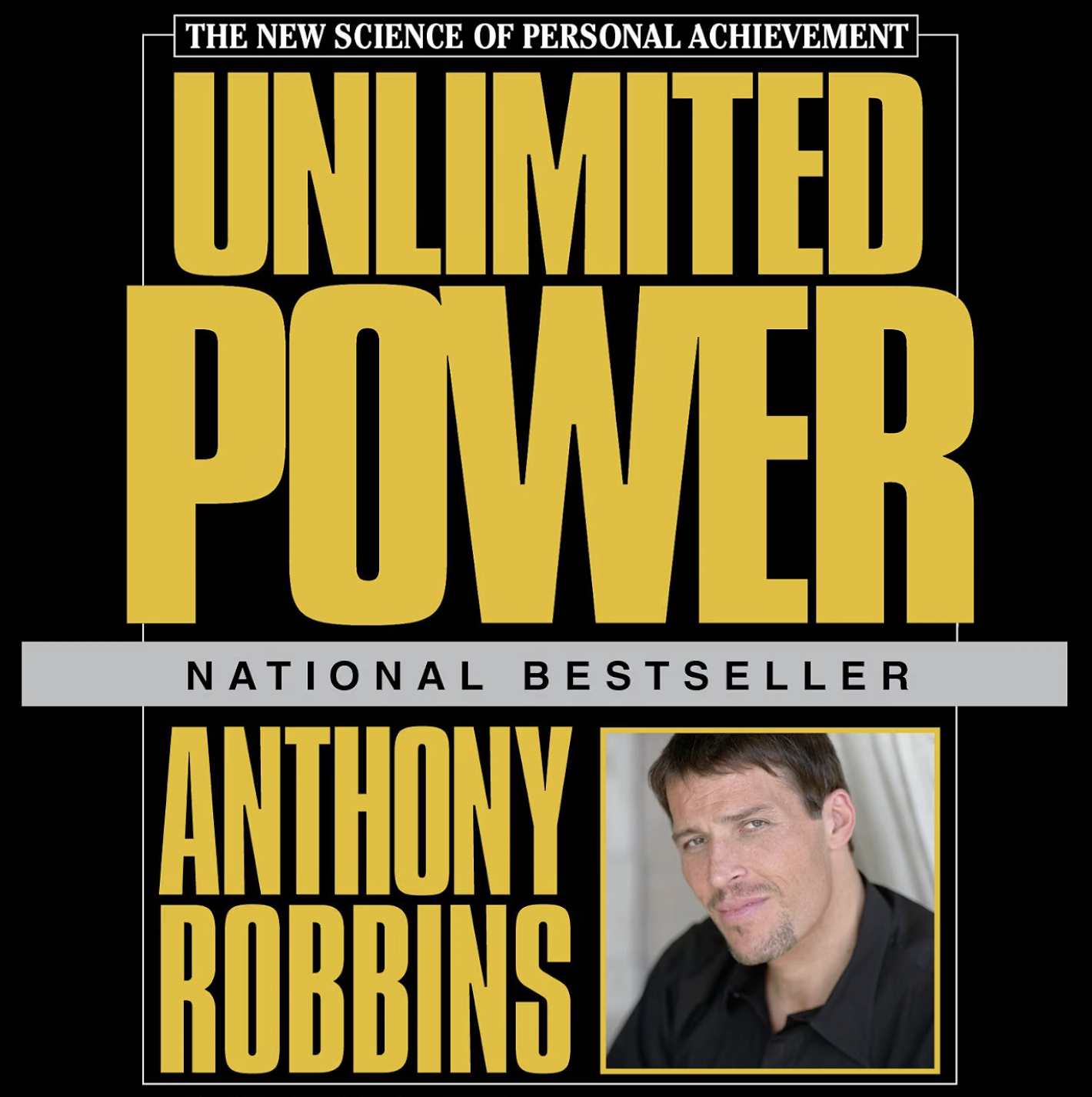
** Unlimited Power by Tony Robbins
Tony Robbins
Tony Robbins is often reduced to the label of motivational speaker, which does not quite capture the breadth of his work. Much of what he teaches centres on behaviour, decision-making, performance, beliefs and the patterns people repeat in their lives.
Awaken the Giant Within remains one of his best-known books, focused on taking greater control over decisions, habits and personal direction. Unlimited Power goes further into performance, communication and changing behavioural patterns, while Money: Master the Game moves into financial decision-making and draws on interviews with major investors including John Bogle, Warren Buffett, Ray Dalio and others.
The useful part of reading someone like Robbins is not agreeing with every idea. It is learning to notice how much of life is influenced by patterns we stop questioning because they have become familiar.
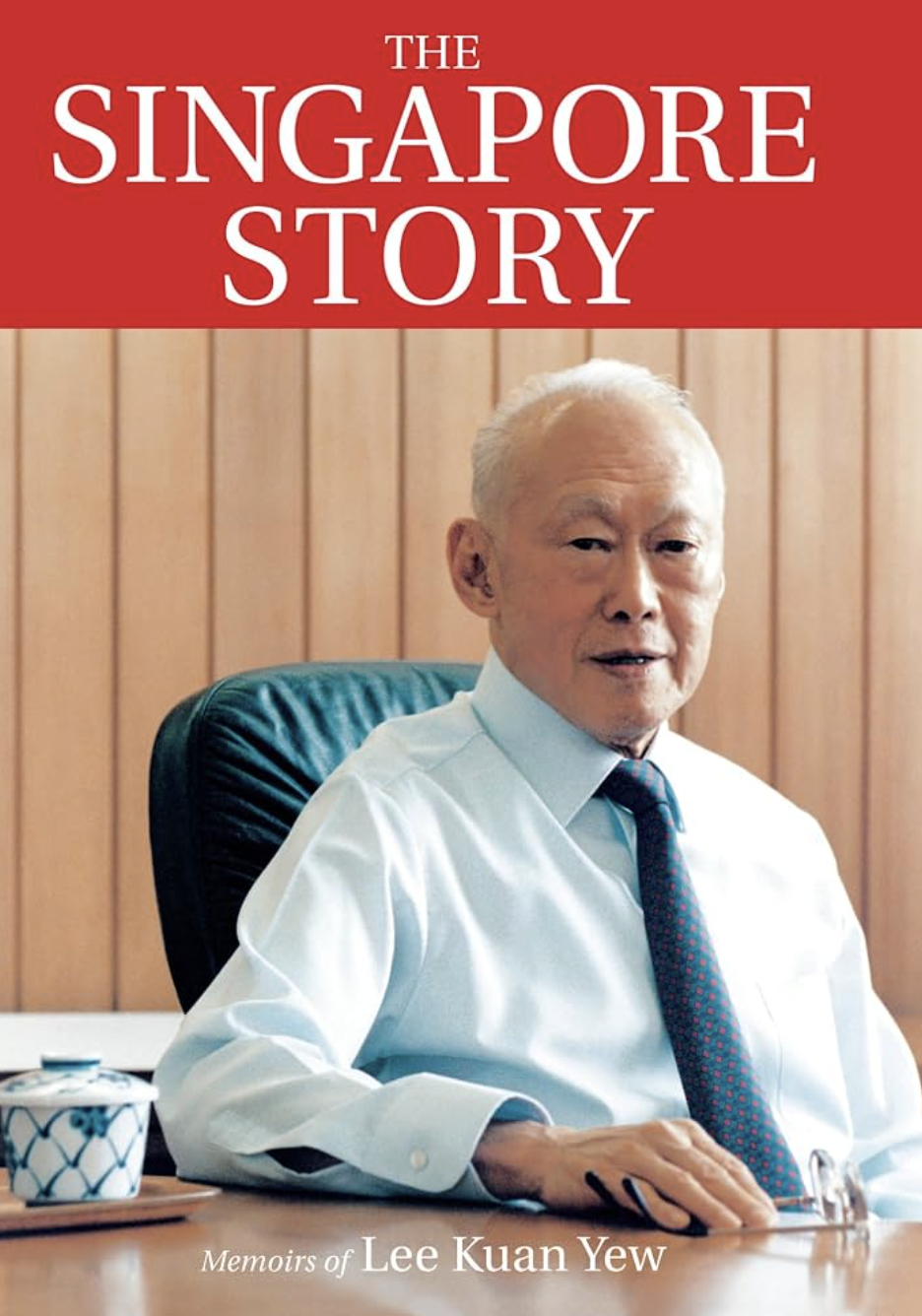
** The Singapore Story: Memoirs of Lee Kuan Yew
Lee Kuan Yew
For anyone interested in leadership, nation-building, difficult decisions and long-term thinking, Lee Kuan Yew is difficult to overlook.
As Singapore’s founding Prime Minister, his legacy is inseparable from the country’s transformation. Singapore’s National Heritage Board describes his legacy in terms of the foundations he helped establish around rule of law, meritocracy, clean government and a shared national stake.
His memoirs are worth reading as more than political history.
The Singapore Story: Memoirs of Lee Kuan Yew covers the years leading towards independence and the political struggles surrounding Singapore’s early development. From Third World to First: The Singapore Story, 1965–2000 continues from independence through the country’s transformation.
Whether every reader agrees with every decision is almost beside the point. There is value in seeing how someone responsible for a country thought about trade-offs, survival, institutions and consequences over decades rather than months.
James Clear
Not every influential book needs to deal with national leadership or major life decisions.
James Clear’s Atomic Habits became successful for a much simpler reason: it takes the idea of personal change and makes it practical.
His central approach is built around small improvements, systems and the environment surrounding our behaviour rather than relying purely on motivation. Clear describes the book as a framework for improving habits gradually and making good behaviours easier to repeat.
It is the sort of book that can be useful precisely because the ideas are ordinary enough to apply to real life.
Napoleon Hill
Think and Grow Rich by Napoleon Hill has been in circulation since 1937 and remains one of the best-known books in the personal-success category. Hill built the book around his study of successful businesspeople and the principles he believed appeared repeatedly among them.
Some of its language belongs clearly to another era, and not every idea needs to be treated as fact. But there is still value in reading influential older works because they show where many ideas about ambition, persistence, purpose and achievement came from.
A book does not have to be modern to make you think.
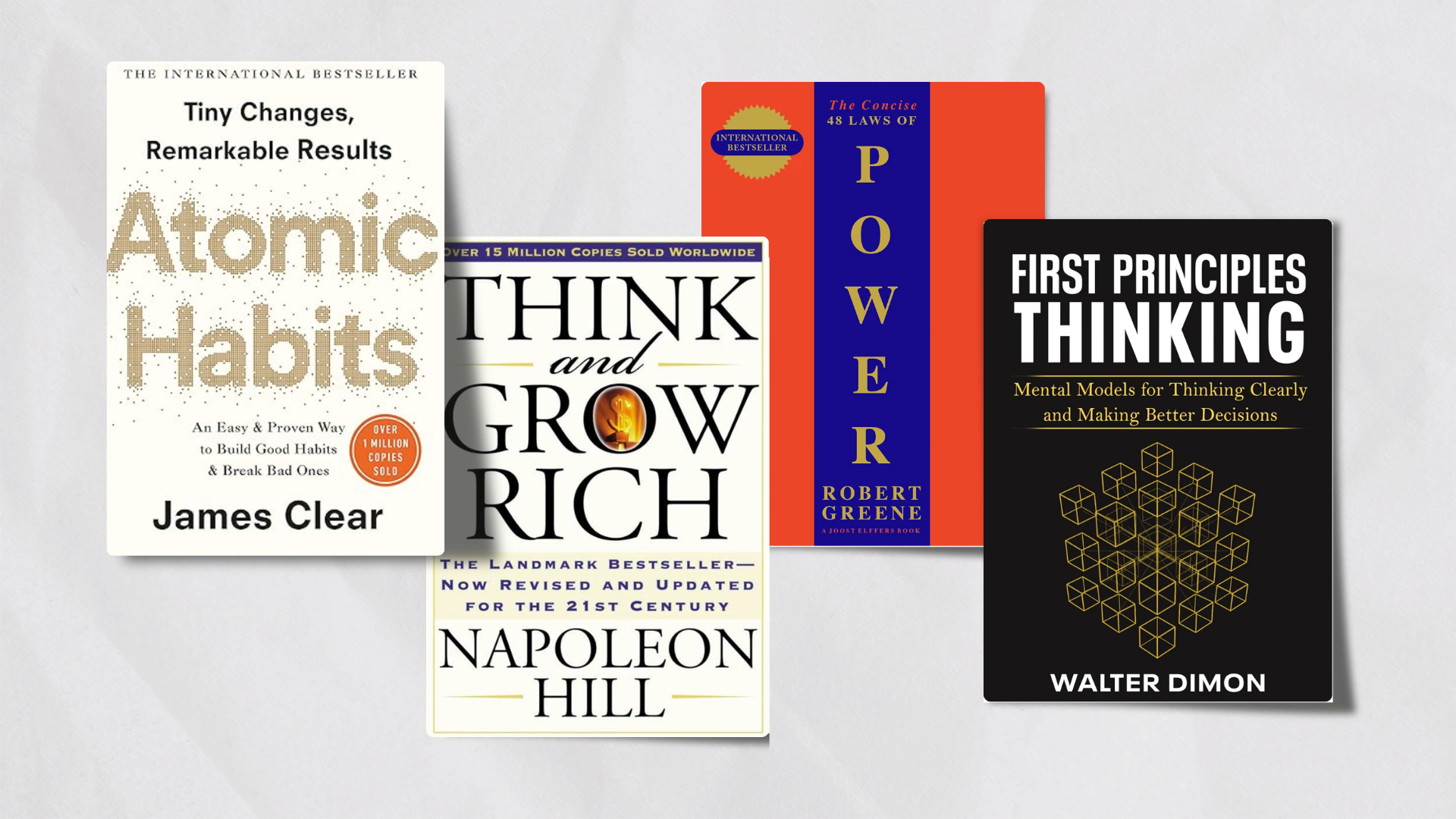
** Books on habits, wealth, power and clearer thinking
Robert Greene
Robert Greene’s The 48 Laws of Power is very different.
It is not a warm book about becoming a better person. It studies power, strategy, manipulation and the way people behave when influence is involved. Penguin describes it plainly as amoral and instructive, which is a useful warning about what kind of book it is.
That does not make it a book to imitate.
It can be a book to understand.
Sometimes reading about difficult human behaviour is useful precisely because it helps us recognise it when we encounter it.
First-Principles Thinking
One idea I would also include is first-principles thinking, although I would not force it into the article as if “First Principles” were one specific famous book.
The value of first-principles thinking is learning to strip a problem back to what is actually true, rather than simply accepting the usual way something is done.
Do we need the product because everyone seems to own one?
Do we need a larger house because that is what success is supposed to look like?
Do we need another system, another subscription or another upgrade?
Sometimes the most useful question is simply: What problem am I actually trying to solve?
That way of thinking can apply to business, money and technology, but it also belongs in ordinary home life.
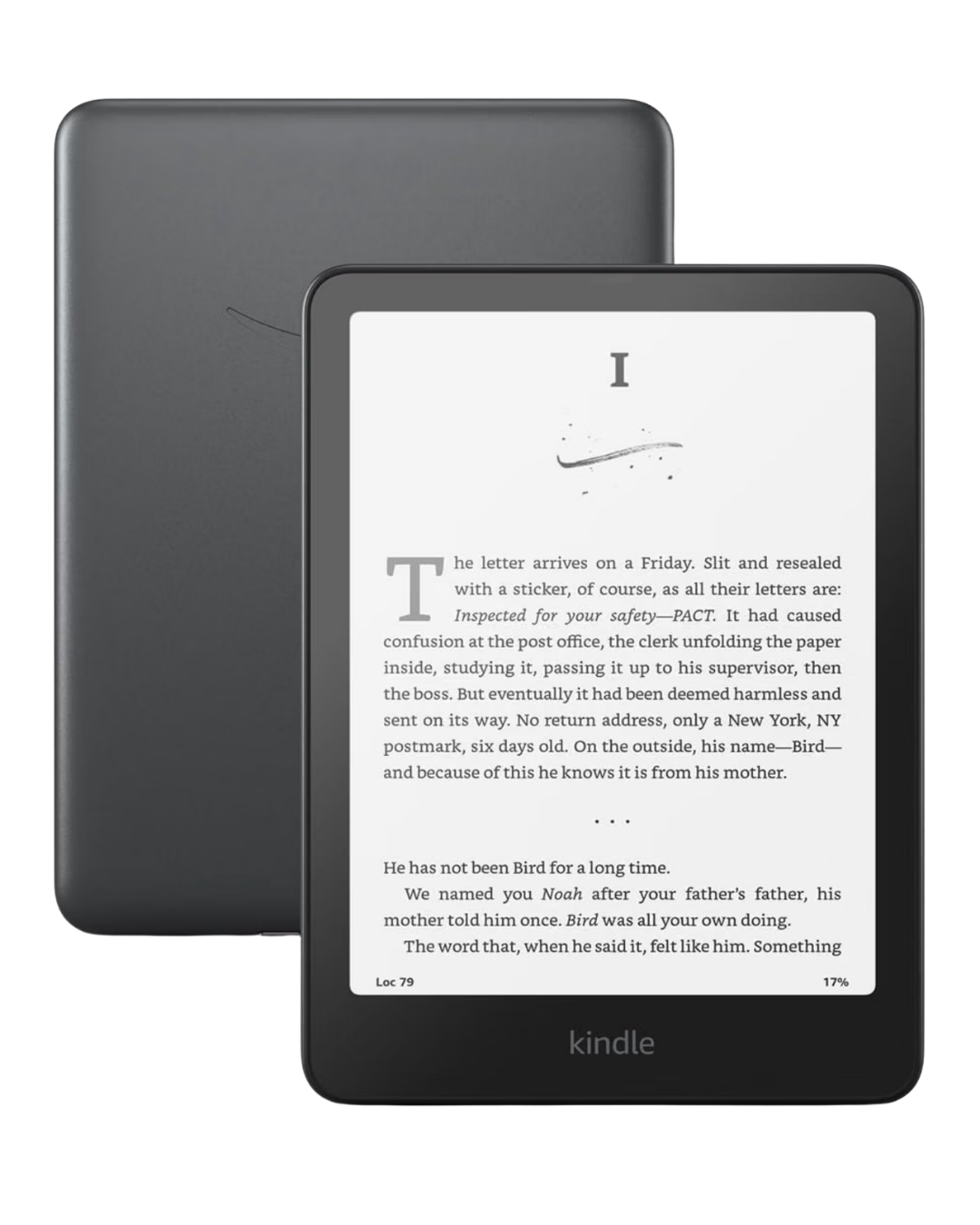
** Kindle e-reader for a lighter digital library.
Reading without filling another shelf
Books take space too.
For someone who prefers a lighter home, that is where digital reading can be useful.
A Kindle can hold a large library without adding another bookshelf, and it can make reading easier when travelling or moving between books. But buying the device does not mean every Kindle book becomes free.
Some ebooks are bought individually. Others may be available through services such as Kindle Unlimited, depending on the title and current catalogue. Availability can vary, so it is worth checking the actual book rather than assuming a subscription includes it.
For some readers, the physical book will still be worth having. For others, the digital version is enough.
The point is not choosing one side.
It is choosing the format that fits the way you actually read.
What stays with us
I do not remember every book I have bought or every chapter I have read.
I do remember certain ideas.
That may be the better measure of a book anyway.
A book earns its place not because it looks good on a shelf, or because someone famous recommended it, but because somewhere inside it was something worth carrying forward.
And unlike many things we bring home, that part does not take up any space at all.